Environmentally Friendly Synthesis of Inorganic Nanoparticles Using Plant Extracts
Naved Azum, Tahseen Kamal, Malik Abdul Rub, Mohammad Asad, Anish Khan, Aftab Aslam Parwaz Khaa, Muhammad Tariq Saeed Chani, Muhammad Nadeem Arshad, Khalid Ahmed Alzahrania, Hadi M. Marwani
Том 88 №4
84 просмотров;
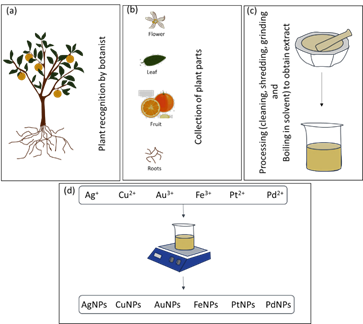
This review examines inorganic metal nanoparticles due to their unique properties, stability, and significant applications in catalysis, environmental remediation, sensing, and biomedical applications. The nanoparticles discussed include silver (Ag), gold (Au), copper oxide (CuO), iron oxide (Fe2O3), platinum (Pt), and palladium (Pd). These materials offer advantages such as high surface-to-volume ratios, tunable properties, catalytic efficiency, and pronounced antimicrobial activity. Their robust bonds and crystalline structures contribute to their stability. The review emphasises recent advancements, particularly from the past two years (2024 & 2025), to provide an up-to-date overview of key developments. Plant-mediated nanoparticles demonstrate notable antimicrobial, antioxidant, and catalytic properties, supporting their potential for biomedical and industrial applications. However, challenges remain, including low synthesis yields, scalability issues, and the complexity of plant extract compositions. Future research should focus on optimising synthesis protocols and elucidating underlying mechanisms to improve nanoparticle performance and facilitate large-scale implementation.