Optimizing Water Removal from Al-Dora Crude Oil Emulsions Using a DC Electric Field via Electrocoalescence
F. A. Jassim, S. T. Najim
Том 88 №6
37 просмотров;
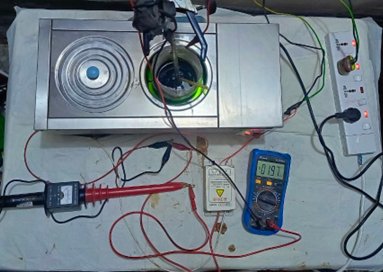
The requisite phase separation of water-in-oil emulsions constitutes one of the most fundamental and ubiquitous processes within the chemical and petroleum industries. Consequently, well-established conventional methodologies, such as the application of electrical demulsification (or electrostatic coalescence), are employed to mitigate these stability issues. This research study investigated the electrical demulsification (or electrostatic coalescence) process of Dura crude oil emulsions. The core objective was to evaluate and analyze the separation performance of these emulsions under the influence of several interacting operational factors. The adopted methodology focused on the synergistic effects of three primary variables: applied voltage, temperature, and treatment time. The experimental conditions utilized the following parameters: applied voltages of 500, 2000, and 5000 V, temperatures of 30, 50, and 70°C and treatment times of 15, 30, and 60 min. The experimental findings clearly indicated that while each factor exerted a specific influence on demulsification efficiency, their combination produced a synergistic effect that enhanced the separation process. The optimal separation efficiency achieved in this study was 40%, attained under the specific operating conditions of 2000 V, 30 min, and 70°C. Furthermore, the study included an examination of the effect of dispersed droplet size on emulsion stability, which was controlled by adjusting homogenization parameters (time and speed). It was explicitly demonstrated that reducing the size of the water droplets resulted in emulsions with higher stability, thereby rendering the subsequent separation of these emulsions significantly more challenging.